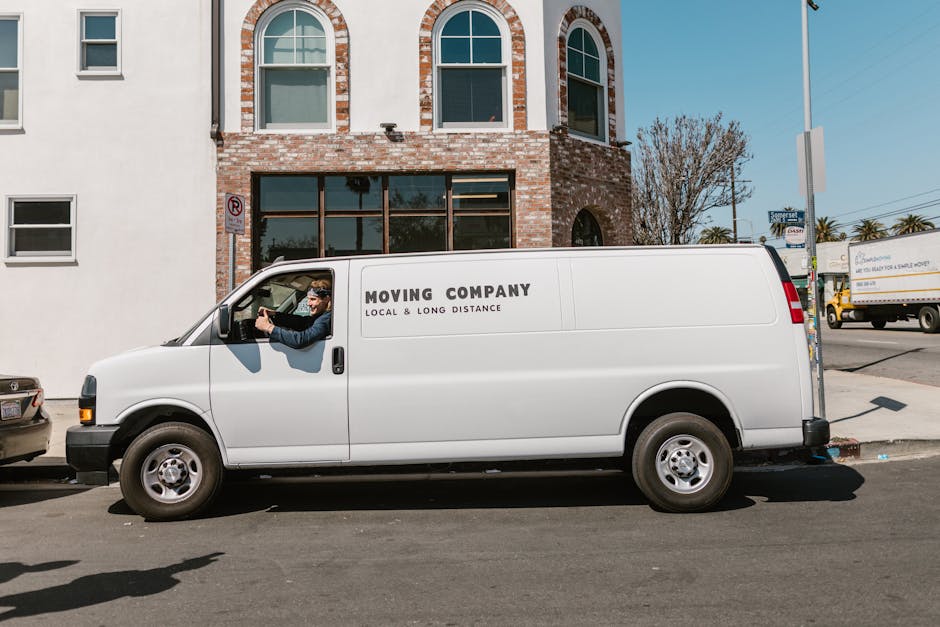
Do you need planning permits for Runnymede moving vans?

Moving day has a habit of exposing every small detail you forgot to sort out. Boxes are stacked in the hallway, the kettle is missing, someone's looking for a charger, and then the big question lands: do you need planning permits for Runnymede moving vans? In many cases, the answer is not a simple yes or no. It depends on where the van will stop, how long it will stay, whether it blocks traffic or access, and what local restrictions apply to the street or property.
This guide breaks the issue down in plain English. We'll look at when permits or permissions may be needed, how the process usually works in the UK, what can go wrong if you skip the checks, and how to plan a smoother move in Runnymede without making the day more stressful than it already is. If you're trying to avoid parking hassle, neighbour complaints, or a last-minute scramble, you're in the right place.
And truth be told, most moving problems are boring ones: tight roads, double yellow lines, low bridges, awkward access, and nowhere to unload. Boring, yes. But they can derail a move faster than you'd expect.
Why Do you need planning permits for Runnymede moving vans? Matters
For most people, the phrase "planning permit" sounds like something you only deal with when building an extension or changing a property. But moving vans can still trigger permission issues in a very ordinary way. The main issue is not usually planning in the architectural sense; it is often about parking, loading, access, and obstruction. In a busy street or a narrow residential road, a moving van parked badly can block entrances, create safety problems, or breach local parking restrictions.
That matters because a move is already stressful enough. If the van is delayed, the crew has to park miles away, or you get a warning from enforcement, the whole day becomes harder. In a place like Runnymede, where some streets are more residential and others have tighter access, it pays to think ahead rather than assume the van can just stop wherever looks convenient.
You may also need to consider whether the van is stopping on private land, a public road, a shared driveway, a communal area, or near a controlled parking zone. Each of those settings can bring a different set of rules. A van that is perfectly fine on one road can be awkward, or even not allowed, two streets away. That is why the answer to "do you need planning permits for Runnymede moving vans?" is really a question about location, obstruction, and local permission.
If you are coordinating a wider move, it can also help to think about the rest of the process, not just the vehicle. For example, if you are moving between properties and need help with packing or storage, it can be sensible to look at the wider moving support available, such as the moving services offered by Trunk Moving, so the logistics are handled in one place rather than stitched together at the last minute.
Practical takeaway: Most moving van issues are less about "planning permission" in the formal sense and more about whether the van is allowed to stop, load, or wait where you need it to. Check the street, the access route, and the property layout early.
How Do you need planning permits for Runnymede moving vans? Works
Let's be clear: there is no universal rule that every moving van in Runnymede needs a planning permit. In practice, the process usually works like this: you identify where the van will park, check whether that space is public or private, and then confirm whether the council, landowner, or property management company has any rules that apply.
1. Start with the parking location
If the van is going to park on a public road, you need to think about parking restrictions. Those might include single or double yellow lines, permit bays, controlled parking hours, loading restrictions, or time-limited waiting. A moving van may be able to load for a short period in some locations, but that does not mean it can stay there all morning while the sofa is carried down three flights of stairs.
2. Check access and width
Some roads simply are not ideal for large vehicles. Tight bends, parked cars on both sides, low trees, weight limits, or narrow entries can make it difficult for a moving van to get in and out safely. If the vehicle cannot manoeuvre without blocking traffic for a long period, that is where extra permission or alternative arrangements may be needed.
3. Confirm who controls the space
Private driveways, apartment forecourts, shared access roads, and estates often have their own rules. The landowner, managing agent, or residents' association may require notice before a van uses the space. That is not always a planning permit, but it functions in a similar way: you need approval before the vehicle arrives.
4. Decide whether a formal permit is needed
Sometimes the answer will be a formal parking suspension, dispensations for loading, a temporary permission from a management company, or written approval from the property owner. In other situations, no formal permit is needed, but the van still needs to be parked lawfully and sensibly. The difference matters.
If you are arranging a move for a flat, a business unit, or a property with limited access, the best approach is to check early. It is far easier to sort a permit or alternative parking option a few days ahead than to try to improvise on the pavement at 8:00 a.m. with a crew waiting and neighbours peering through the curtain. Happens all the time, annoyingly.
Key Benefits and Practical Advantages
Sorting the permission side of a move may not feel exciting, but it gives you some very real advantages. The biggest one is control. When the van has a proper place to stop, the move feels calmer, more organised, and far less likely to attract unwanted attention from enforcement or irritated neighbours.
- Smoother loading and unloading: The team spends less time walking heavy items from a distant bay or side road.
- Lower risk of penalties or disruption: You reduce the chance of parking tickets, complaints, or an awkward knock from enforcement.
- Better timing: A well-placed van keeps the day moving, especially when there is a fixed handover time on both properties.
- Less damage risk: Shorter carry distances mean less chance of knocking walls, doors, or furniture corners.
- More predictable costs: Fewer delays usually means fewer surprise charges from extended labour time or failed access.
There is also a quieter benefit: peace of mind. When you know the vehicle has somewhere legal and workable to be, you stop worrying about the van before breakfast. That may sound small, but on moving day, small things matter.
If you are comparing move planning options, it helps to think ahead about the full journey, not just the vehicle. For many households, the best outcome comes from pairing good access planning with a reliable removals setup such as the house moving support from Trunk Moving, especially where stairs, restricted parking, or same-day turnaround make the logistics a bit fiddly.
Who This Is For and When It Makes Sense
This question matters most for people moving from or into places with limited access. If you live on a quiet road with a clear driveway, the answer may be straightforward. If not, you need to pay closer attention.
You are more likely to need to check permits or permissions if you are:
- moving from a flat, apartment block, or maisonette
- using a van on a busy residential street
- parking near a school, junction, or narrow road
- moving into a managed estate with private rules
- handling a same-day move with a tight access window
- unloading bulky furniture that needs the vehicle to stay close to the entrance
It also makes sense to check carefully if the move falls on a weekday morning, a weekend with heavy local traffic, or a day when neighbours may already be using the road for parking. In some streets, the real issue is not whether a van can fit. It is whether it can stop without causing a domino effect of blocked cars and irritated calls. Nobody wants that.
For business relocations or commercial deliveries, the stakes can be higher still. You may need to balance access for staff, clients, loading bays, and neighbouring properties. In those cases, early planning is not just useful; it is part of sensible operations.
Step-by-Step Guidance
If you want a simple way to deal with the permit question, follow a structured approach. It keeps the process practical and stops you from missing something obvious.
Step 1: Identify the exact parking spot
Be specific. Don't just say "outside the house." Note whether the van will be on the road, on private land, in a bay, at the kerb, or on a shared access route. The exact spot determines the rules.
Step 2: Check the property type
A house with a driveway is different from a top-floor flat with no loading space. If there is a management company, concierge, or estate office involved, ask them what is allowed. They may already have a process for temporary access.
Step 3: Review local parking restrictions
Look for obvious signs around the street: yellow lines, resident permit bays, loading signage, red routes, or time-based restrictions. If the road is heavily controlled, assume nothing. Moving vans are not magical just because they are moving vans. They still have to obey the rules.
Step 4: Assess vehicle size and access route
Some removal vehicles are much larger than a standard transit-style van. Check whether the vehicle can safely turn, reverse, or unload without blocking the street for too long. If access is tight, it may be better to use a smaller vehicle or a shuttle arrangement.
Step 5: Ask whether a temporary permit or notice is needed
This is where you confirm whether any formal permission exists for the slot you need. It could be a council parking arrangement, a private permission, or simply written approval from a managing agent. Keep a record. A quick email or text can save a lot of confusion later.
Step 6: Plan the loading sequence
Once the access issue is settled, line up the actual move. Heavy items first or last? Which room gets packed first? Where do the keys arrive? These small decisions become much easier when the van position is already sorted.
Step 7: Have a backup plan
Always, always have a fallback. A nearby legal parking option, a loading plan for a shorter carry, or an alternate arrival time can rescue the day if the original spot is unexpectedly blocked.
Expert Tips for Better Results
From a practical point of view, the best moving days are rarely the ones with the fanciest paperwork. They are the ones with fewer surprises. A few field-tested habits make a real difference.
- Measure before the day: If you suspect the van is large, measure the access point, driveway width, gate opening, and any awkward corners.
- Speak to neighbours early: A quick heads-up can prevent complaints if the van will temporarily take up extra space.
- Keep contact details handy: If the driver needs to call someone on arrival, make sure the right number is saved and working.
- Label the busiest items clearly: The quicker the van is loaded, the less time it spends in a sensitive parking spot.
- Allow a time buffer: Traffic, lift delays, and key handover issues happen. They just do.
A small but useful trick: if you know the road gets busy at school-run time or after work, pick a calmer window if you can. The street sounds different at 7:30 a.m. than it does at 3:30 p.m., and that matters when a van is trying to stop, unload, and get out without a queue forming behind it.
Another thing people miss is lighting and weather. A wet, dark evening move is harder than a dry daytime one, especially if the crew has to carry items farther because parking is awkward. You may not be able to control the weather, of course. If only. But you can control the plan.
Common Mistakes to Avoid
Most permit-related move problems come from assumptions. People assume the van can park "just for a minute," or that a large vehicle can use a resident bay without issue, or that the property manager will not mind because it's only one day. Then the morning arrives and everything gets a bit twitchy.
- Assuming loading equals free parking: Loading and parking are not the same thing. Restrictions still apply.
- Forgetting private rules: Managed developments and estates may have their own access requirements.
- Leaving it until moving day: This is the big one. Last-minute checking usually means fewer options.
- Ignoring bay sizes: A van may technically fit in a space but still block turning or visibility.
- Not telling the removal team: If the crew expects one access point and gets another, time gets wasted quickly.
- Skipping written confirmation: Verbal approval is nice, but written approval is better when there's any dispute later.
A subtle mistake, and one that catches people out, is failing to think about what happens after unloading. A van that can stop for 20 minutes may not be able to stay there for two hours while you reorganise the kitchen and find the TV remote. The space has to work for the actual move, not the idealised version of it.
Tools, Resources and Recommendations
You do not need specialist software to answer the question "do you need planning permits for Runnymede moving vans?" but a few simple tools make the process easier and more reliable.
- Street view or mapping tools: Useful for checking road width, turning space, and nearby parking patterns.
- Property plans or estate maps: Handy if you are dealing with a managed site or shared access route.
- Moving day checklist: Keeps the permit, parking, and access tasks in one place.
- Email or message records: Helpful for written permissions and contact details.
- Box labels and room lists: They speed up unloading, which matters when your parking window is tight.
For many households, the best "resource" is simply a calm plan. That sounds obvious, but it is amazing how much easier a move feels once the route, parking, and loading order are written down. One page. One plan. Less chaos.
If you are still at the quote stage and comparing service options, it can be worth speaking to a mover who understands access issues, not just box counts. A team that has dealt with awkward roads, flats, and limited stopping space will usually ask better questions from the start.
Law, Compliance, Standards and Best Practice
This is the bit where caution matters. Planning permits are not always the right label for moving van access, and the rules can vary depending on whether you are dealing with a public road, private land, or a managed development. In UK practice, the key points are usually parking restrictions, obstruction issues, traffic safety, landowner permission, and any local requirements set by the relevant authority or site manager.
In plain terms, you should not assume that because a van is "only loading" it can ignore restrictions. Equally, you should not assume you need formal planning permission just because a van is large. Often the correct answer sits somewhere in the middle: check the space, get the right approval where required, and make sure the vehicle can operate without causing danger or unnecessary blockage.
Best practice usually includes:
- checking restrictions before booking the vehicle
- getting written permission for private or managed property access
- avoiding obstruction of driveways, crossings, and emergency access
- keeping unloading as efficient as possible
- following any instructions from the property owner or local authority
There is also a basic duty of care angle here. If a van is parked badly and causes damage, blocks access, or creates a hazard, the problem may quickly become more than a scheduling issue. So yes, the paperwork matters. But the practical behaviour matters more.
Options, Methods, or Comparison Table
If you are trying to decide how to handle the moving van, it helps to compare the most common options side by side.
| Option | Best for | Pros | Watch out for |
|---|---|---|---|
| No formal permit, lawful street parking | Quiet roads with clear legal parking | Simple, low admin, quick setup | Can still be limited by time restrictions or bay controls |
| Temporary permission or suspension | Controlled parking areas or busy streets | More certainty, better unloading access | May need advance notice and coordination |
| Private land or driveway access | Homes or properties with off-street space | Usually easiest for loading | May require landowner or management approval |
| Shuttle or smaller-vehicle approach | Tight streets or restricted access | More flexible in narrow spaces | Can take longer and involve more handling |
The right option depends on the street, the vehicle, and the property. A driveway move in a quiet cul-de-sac is a very different beast from a third-floor flat on a restricted road. Different days, different headaches.
Case Study or Real-World Example
Here's a realistic scenario. A couple is moving from a second-floor flat in Runnymede to a terraced house a few streets away. They assume the removal van can park outside the flat for an hour because the street looks open enough. On the day, though, the nearest legal bay is several doors down, and the van would need to sit on a restricted section for unloading.
At first glance, it seems manageable. But once the team starts carrying boxes, it becomes clear the carry distance is longer than expected. The sofa is awkward. The hallway at the new property is narrow. A neighbour has parked half over the kerb, so the van cannot tuck in neatly. Everyone's trying to be polite, but you can feel the tension building. Classic moving day energy.
The couple had one simple advantage: they checked the parking situation the day before and arranged an alternative loading spot through the property manager. That meant the van could stop legally, the crew could work faster, and the move finished without a ticket, a complaint, or a last-minute rescue mission. Nothing glamorous. Just good planning.
That is the real lesson. You do not need to overcomplicate it. You need the right stop, the right timing, and enough certainty to keep the move flowing.
Practical Checklist
Use this checklist before the van arrives. It is a simple way to avoid the common headaches.
- Confirm the exact address and unloading point
- Check whether the van will be on public road, private land, or shared access
- Review parking signs, restrictions, and bay rules
- Ask the property manager or landowner if approval is needed
- Measure any tight entrances, gates, or turning spaces
- Share access notes with the removal team
- Arrange written permission where appropriate
- Plan a backup parking location
- Keep phone numbers for the driver and property contact ready
- Make sure boxes and furniture are ready to load quickly
Quick reminder: If anything about the access feels uncertain, treat it as a problem to solve now, not later. Later is where moving-day stress multiplies.
Conclusion
So, do you need planning permits for Runnymede moving vans? In many cases, not in the formal planning sense. But you may still need permission, approval, or a parking arrangement depending on where the van will stop and how the move will affect access or traffic. That is the real answer, and it is worth checking carefully.
The safest approach is simple: confirm the parking situation early, get any private or local approval in writing, and build the move around practical access rather than wishful thinking. Do that, and the whole day feels less frantic. You will still have boxes, tape, and at least one mystery item nobody packed properly, but the van itself will not be the problem.
Get a free quote today and see how much you can save.
When the parking is sorted and the plan makes sense, moving day becomes much easier to live through. And sometimes, that is all you really need.
Frequently Asked Questions
Do you always need planning permission for a moving van in Runnymede?
No, not usually. Most moving van situations are handled through parking rules, landowner approval, or access arrangements rather than formal planning permission. The key is to check the exact location and restrictions.
Is loading and unloading the same as parking?
No. Loading is a temporary activity, but it still has to follow the rules for the space you are using. Some streets allow short loading; others do not. Never assume the van can stop just because it is moving house.
What if the van needs to park on a public road?
Then you need to check the road markings, time restrictions, and any loading rules. If the road is controlled, you may need a special arrangement or an alternative parking plan.
Do private driveways need permission?
If the driveway is your own and there are no shared access issues, usually not. But if it is part of a managed property, shared estate, or leasehold arrangement, you may need approval from a landlord or managing agent.
Can a moving van block the road while unloading?
Only if it can do so safely and lawfully, and even then only for the shortest practical time. If it causes an obstruction or breaches parking rules, you could run into problems very quickly.
How far in advance should I check access and parking?
As early as possible. A few days ahead is better than the night before. If the area is tight or controlled, earlier still. A bit of lead time makes everything less frantic.
What happens if I get the parking wrong?
You may face delays, fines, neighbour complaints, or extra labour time. In a worst-case scenario, the van may need to relocate and the move becomes much more stressful than it should be.
Are apartment moves more likely to need permission?
Yes, often. Flats and apartments commonly involve shared access, permits, concierge rules, lifts, or restricted loading areas. It is sensible to check the building rules before booking the van.
Should I tell the removal company about local restrictions?
Absolutely. The more they know in advance, the better they can plan the vehicle size, arrival time, and unloading approach. It saves awkward surprises on the day.
What is the biggest mistake people make with moving vans?
Leaving parking and access checks until the last minute. That is the one that causes the most stress, and to be fair, it is the most avoidable.
How do I know whether I need a formal permit or just permission?
It depends on the location. Public roads usually involve parking restrictions, while private land or managed properties usually involve permission from the owner or manager. If you are unsure, ask before the move.
Can bad weather affect whether the van needs special arrangements?
Not legally, but practically yes. Rain, darkness, or icy conditions can make loading slower and more awkward, which makes good access even more important.