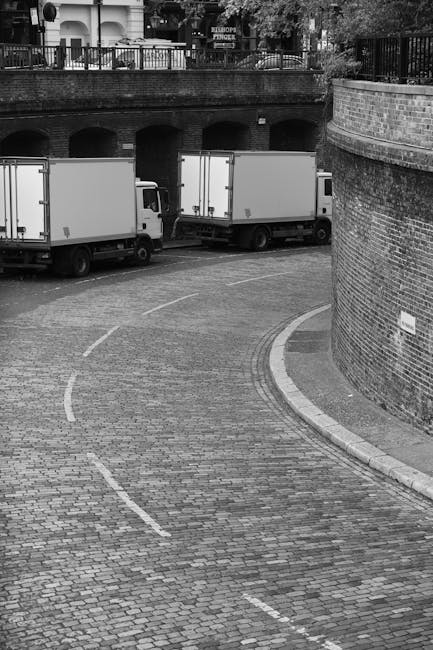
TW20 removals guide to narrow streets and parking in Egham

If you are moving in TW20, the hard part is often not the boxes. It is the street itself. Egham has plenty of roads where parking is tight, corners are awkward, and a larger van can feel like a puzzle piece that almost fits, but not quite. This TW20 removals guide to narrow streets and parking in Egham is here to make the moving day feel calmer, more organised, and a lot less risky.
Whether you are planning a home move, shifting a few bulky items, or arranging a full property clearance, the same basic challenges keep coming up: where the vehicle can stop, how long it can stay there, how to protect neighbours' access, and how to keep the job moving without unnecessary stress. Let's face it, nobody wants to be halfway through a move and realise the lorry is blocking the only narrow gap on the road.
This guide covers how access planning works, what to check before the van arrives, where people usually go wrong, and how to choose the right moving approach for a narrow street. You will also find a practical checklist, a comparison table, and realistic advice that works in everyday moving situations, not just in theory.
Why TW20 removals guide to narrow streets and parking in Egham Matters
In a narrow street, small decisions have a big effect. If the vehicle is too large, if parking is guessed rather than checked, or if neighbours cannot pass safely, the whole move can slow down. That means more lifting, more waiting, and more pressure on everyone involved. On a wet morning, with cars squeezing past and people trying to leave for work, the whole thing can turn fiddly fast.
TW20 includes a mix of residential streets, older property layouts, and roads where parking is far from generous. Some homes have no driveway at all. Others have front gardens, shared access, or tight turns that make larger vehicles awkward. Even when the actual move is straightforward inside the property, the outside logistics can be the real challenge.
This matters for both private and commercial moves. A family moving from a terraced house will have very different access needs from an office relocation or a furniture pick-up. If you are booking a broader move, services such as home moves, house removalists, and commercial moves are only as smooth as the access planning behind them.
Good parking and access planning also helps protect your belongings. Long carries increase the chance of knocks, drops, and muddy footprints. And in tight streets, one poorly placed vehicle can make it harder for the crew to manoeuvre heavy furniture safely. The result? A move that feels more expensive, more tiring, and more chaotic than it needed to be. Nobody needs that.
How TW20 removals guide to narrow streets and parking in Egham Works
The basic idea is simple: plan the vehicle, the loading point, and the walking route before moving day. In practice, that means checking how close the van can get to the front door, whether there is space to stop for loading, and whether the street can handle the size of vehicle being used.
For smaller or lighter moves, a flexible service like man and van or man with van can often be easier to position in tight roads. For larger household moves, a bigger vehicle may still be fine, but only if there is a sensible access plan. In some cases, removal truck hire or a moving truck is the right fit, but only after the street layout has been considered properly.
Here is how the process usually works in a practical sense:
- Assess the street width and any parked cars nearby.
- Check whether the vehicle can stop without blocking essential access.
- Estimate the carry distance from vehicle to property.
- Decide whether multiple smaller loads would work better than one large vehicle.
- Plan for awkward items such as sofas, wardrobes, beds, or office furniture.
- Allow time for loading delays if the road is busier than expected.
That is the short version. The more detailed version is that a move in a narrow Egham street should be treated like a small logistics job, not just a collection of boxes. The smartest teams think about timing, route access, and street behaviour before the van even turns up.
If you are moving office stock, archived files, or desks from a tight site, office relocation services can help structure the process around access limits rather than trying to force a one-size-fits-all approach.
Key Benefits and Practical Advantages
When access is planned well, the move tends to feel less frantic. That sounds obvious, but it makes a real difference. People often expect the benefit to be "save time", which is true, but the more noticeable win is usually reduced friction. Less shouting across the road, fewer awkward pauses, fewer last-minute reshuffles. Much nicer.
- Less carrying distance: This lowers the physical strain and reduces the chance of damage.
- Better timing: Loading and unloading become more predictable when the parking spot is sorted first.
- Lower risk of disruption: Neighbours, visitors, and delivery traffic are less likely to be inconvenienced.
- Smarter vehicle choice: You are less likely to overbook a truck that is too large for the road.
- Cleaner, calmer move day: Fewer improvised decisions mean fewer mistakes.
There is also a hidden benefit: confidence. Once the access plan is sorted, people tend to relax. The customer knows what is happening, the crew knows where they are parking, and there is less back-and-forth on the day. Simple, but it works.
For furniture-heavy moves, combining access planning with help from packing and unpacking services can make the whole day more efficient, especially if there are tight staircases or second-floor flats with no obvious loading space.
Who This Is For and When It Makes Sense
This guide is for anyone moving in or around TW20 where parking is not easy. That could mean a terraced house near a narrow residential road, a flat with no immediate kerbside space, a family home with a tight turning circle, or a small business needing a careful loading plan. If that sounds familiar, you are in the right place.
It is especially useful if you are:
- moving from a street with limited on-road parking;
- booking a same-day collection for a bulky item or two;
- relocating a flat, maisonette, or townhouse;
- arranging an office or shop move where customer access must stay open;
- using a van or truck for the first time and not sure how it will fit;
- trying to keep costs down by avoiding avoidable delays.
For smaller jobs, a flexible option like furniture pick-up can be a better fit than sending in a larger vehicle. A lot depends on the item count, the height of the property, and how much legal parking or stopping space exists outside. That is the bit people underestimate.
If you are planning a full home move, the safer approach is to start with the access question first and the inventory second. You can always move boxes. You cannot always move a 7.5-tonne vehicle into a road that barely fits two parked cars side by side.
Step-by-Step Guidance
Here is a practical process that works well for narrow streets and awkward parking in Egham.
- Walk the street in advance. Look at the parking layout, turning room, blind corners, and any time-based restrictions. If possible, do this at roughly the same time of day as your planned move.
- Measure the obvious pinch points. You do not need a surveyor's toolkit. Just note whether the road narrows near bends, parked cars, lamp posts, low branches, or tight kerbs.
- Match the vehicle to the space. A smaller van may be more efficient than a larger lorry if the road is awkward. A slightly longer journey from the house to the vehicle can still be easier than trying to force a big truck into a cramped street.
- Think about loading position. Ask where items will come out of the property and where they will be carried to. Front door, side gate, shared path, rear access? It all matters.
- Book enough time. Tight access almost always adds a little complexity. Give yourself breathing room so the day does not feel rushed.
- Prepare neighbours and householders. A quick heads-up can avoid a lot of awkwardness. If anyone needs space to leave early, it helps to know that before the van arrives.
- Protect fragile or awkward items. Mirrors, glass tables, and flat-pack furniture can be especially vulnerable if they have to be carried further than expected.
- Keep the route clear. On move day, remove loose planters, bikes, bins, and anything else that might catch a shoulder or wheel.
A small detail people often miss: the street can feel very different when it is full of cars. So what looked manageable on a quiet afternoon may be annoying at 8:00 a.m. on a weekday. Time of day changes everything.
If you are unsure about the vehicle size, it is usually wiser to speak about the parking and access first, then choose the transport around that. That is where a service such as man and van can be useful for lighter or more flexible moves.
Expert Tips for Better Results
In our experience, the best moves in narrow streets are the ones where people stay a bit boring beforehand. Boring in the best way. They check, measure, confirm, and prepare. Nothing dramatic. Nothing left to guesswork.
- Use a staging area inside the property. Put packed boxes near the exit before the crew arrives, so loading starts quickly.
- Label awkward items clearly. If something must stay upright, say so. If it is fragile, make that obvious from the outside.
- Prioritise large furniture first. If the road is likely to become busier later in the day, move the biggest items early.
- Keep one person focused on access. A helpful person outside can watch for incoming traffic, manage parking space, and guide the vehicle in.
- Use smaller loads when it makes sense. Two well-planned trips with a smaller vehicle can sometimes be faster than one frustrating attempt with a larger one.
- Have a backup plan. If the prime parking spot is taken, know the next-best option before moving day.
Here is a small truth from the field: a move does not usually go wrong because of one massive failure. It goes wrong because three little things all become inconvenient at once. A parked car here, a narrow gate there, and a late arrival. Suddenly, everyone is carrying a wardrobe farther than they wanted to. Not ideal.
If you are handling a business relocation, do not forget the customer side of the picture. A road closure feeling, even without an actual closure, can put off staff, deliveries, and visitors. That is why the more structured commercial moves route is often worth considering for shops, studios, and offices.
Common Mistakes to Avoid
Most access problems are avoidable. The trouble is, people only notice them when the van has already arrived. That is when you hear the sentence nobody wants to hear: "I thought we'd just fit."
- Assuming the van can stop anywhere. Kerb space is not always available, and even short stops can be awkward in tight streets.
- Choosing vehicle size before checking access. Bigger is not always better. Sometimes it is just more difficult.
- Forgetting about loading height or stair access. A difficult staircase can multiply the effect of poor parking.
- Leaving loose items outside too early. They can get damp, blown over, or moved by neighbours trying to help.
- Not allowing for traffic patterns. School runs, commuter periods, and local deliveries can change the feel of a road dramatically.
- Ignoring the return journey. It is one thing to park briefly for loading. It is another to do the same after unloading when the road is busier.
A more subtle mistake is underestimating how much easier the day becomes when packing is done properly. Using sensible boxes, keeping weight balanced, and avoiding half-filled containers helps more than people expect. If you want to streamline that side too, packing and unpacking services can take a surprising amount of pressure off the day.
Tools, Resources and Recommendations
You do not need specialist software to plan a TW20 move. A phone camera, a notepad, and a few measurements are often enough. Still, a structured approach helps.
| Need | Useful approach | Why it helps |
|---|---|---|
| Street access check | Take photos of the road, kerb space, and any pinch points | Helps the mover judge vehicle suitability before arrival |
| Parking plan | List the first, second, and third parking options | Reduces stress if the preferred spot is occupied |
| Vehicle choice | Compare a smaller van against a larger truck | Prevents overcommitting to a vehicle that is hard to place |
| Heavy item handling | Use protective wrapping and clear item labelling | Makes longer carries safer and more controlled |
| Timing | Book an early slot where possible | Can reduce the chance of crowded streets and blocked access |
For bigger or mixed-item moves, you may also want to think about whether removal truck hire or a more compact van option is the more realistic fit. The best option is not always the biggest one. It is the one that makes the street work for you rather than against you.
If you are still pricing up the move, it is sensible to review pricing and quotes alongside the access details. A quote is only genuinely useful when it reflects the real logistics, not just the address on paper.
For items that need removing but are not part of a full move, furniture pick-up is worth keeping in mind. It is a practical solution when a single bulky item would otherwise complicate the whole parking picture.
Law, Compliance, Standards, or Best Practice
Without getting too heavy about it, narrow-street moves should follow sensible UK road and safety practice. That means not blocking driveways, keeping footpaths usable where possible, and avoiding unsafe loading or unloading. If a vehicle has to stop in a more awkward position, the move should still be managed carefully and lawfully. Common sense matters here, and so does respect for the street.
Parking enforcement, local restrictions, and access rules can vary, so it is wise to check local conditions rather than assume. The exact position can depend on the street, the time of day, and whether other vehicles are already parked nearby. If you are unsure, ask the mover to assess the likely access risk ahead of time.
There is also a basic safety standard at play. Loads should be secured, walkways should be kept reasonably clear, and heavy items should be carried with enough space to turn safely. In cramped conditions, rushed lifting is the thing to avoid. A careful move is almost always a better move.
If you want reassurance about how a provider approaches safety and accountability, pages such as health and safety policy, insurance and safety, and terms and conditions can help you understand the basics of how the work is managed. That kind of clarity is boring until you really need it.
Options, Methods, or Comparison Table
Not every Egham move needs the same setup. Here is a simple comparison of common approaches for narrow streets and parking-sensitive jobs.
| Option | Best for | Strengths | Trade-offs |
|---|---|---|---|
| Man and van | Light to medium moves, awkward streets, flexible access | Easy to place, adaptable, usually simpler in tight roads | Less suited to very large loads |
| Moving truck | Bigger home moves with enough street space | Handles larger volumes in one go | Can be harder to park in narrow roads |
| Removal truck hire | Moves where larger capacity is needed and access is manageable | Useful for substantial furniture or multiple rooms | Needs better planning around parking |
| Furniture pick-up | Single items or a few bulky pieces | Fast, simple, less disruptive | Not ideal for full-property moves |
| Office relocation services | Business moves with time pressure and access limits | Structured, coordinated, practical for busy sites | Needs more planning upfront |
If the street is genuinely tight, smaller and more flexible is often the smart choice. If the property has good frontage or you can control the parking area for a period of time, a larger vehicle may be fine. The right answer is usually dictated by the street, not by preference.
Case Study or Real-World Example
Imagine a two-bed flat move in TW20 on a road where only one side has usable parking, and that parking is often taken by residents before 9 a.m. The customer has a sofa, two beds, a dining table, and a stack of boxes. Nothing outrageous. But the street is narrow, and there is no driveway.
The first instinct might be to book the biggest van available and hope for the best. In practice, that can make the job harder. A better approach is to use a van that can stop quickly and safely, keep the carry route short, and load in a sensible order. The sofa and bed frames go first. Smaller boxes fill the gaps. The crew avoids repeated repositioning, and the move flows with less waiting.
The difference is not dramatic to look at. No fireworks. No heroic moment. But by lunchtime, the job is calmer, the neighbours are less inconvenienced, and the customer is not standing there with that "why is this taking so long?" expression. That kind of outcome matters.
For a business move, the same logic applies, only the stakes feel sharper. Office desks, IT equipment, and files do not like casual handling. A careful plan, good parking coordination, and the right vehicle type help keep the day orderly. If you are relocating a workplace, comparing commercial moves with office relocation services can help you decide which structure fits the job best.
Practical Checklist
Use this checklist before move day. It is straightforward, but it catches most of the small issues that cause headaches later.
- Confirm the street name, access point, and parking options.
- Take photos of the road, turning area, and loading side.
- Check whether there are school-run, commuter, or delivery pressure times.
- Decide whether a van, truck, or smaller pick-up vehicle is the better fit.
- Let neighbours know if access could be temporarily tight.
- Pack awkward or fragile items separately and label them clearly.
- Clear the hallway, steps, and entrance before the crew arrives.
- Protect flooring where foot traffic will be heavy.
- Keep the best parking option and a backup option in mind.
- Have a contact number ready on the day in case the crew needs direction.
- Review safety, insurance, and payment details before confirming the booking.
If you are moving a full household, you may also want to think about packing help in advance. A little preparation goes a long way, especially when the front of the house is the only practical loading zone.
One more thing: if there are items you no longer need, sorting them out early can reduce pressure on move day. Sometimes clearing a few bulky pieces first makes the parking problem feel much less dramatic. Odd, but true.
Get a free quote today and see how much you can save.
Conclusion
Narrow streets and limited parking do not have to make moving in TW20 a nightmare. They just need respect, planning, and the right vehicle choice. Once you look at the street properly, the rest becomes much easier to control. The move may still be busy, and yes, there may still be a little chaos around the edges, but it will be the manageable kind.
The main lesson is simple: do not leave access to chance. Measure what you can, choose the right moving setup, and plan for the reality of Egham roads rather than the ideal version in your head. That one shift in mindset usually saves time, energy, and a fair bit of stress.
If you are preparing a move and want the parking and access side handled with care, speak to a team that understands tight streets, awkward loading, and real local conditions. A thoughtful plan now is far better than improvising on the kerb later. And honestly, your future self will thank you.
Frequently Asked Questions
What is the best vehicle for narrow streets in TW20?
It depends on the road width, turning space, and how much parking is available. For many tight streets, a smaller van is easier to place and may be more practical than a larger truck.
How do I know if a removal van can fit outside my house?
The safest approach is to check the street in advance, look for pinch points, and take photos for reference. A moving company can usually advise once it can see the access conditions.
Should I reserve parking for moving day?
If parking is usually busy, it is worth planning the best available stop point and a backup option. The exact method depends on the street and local restrictions, so treat it as a practical access issue rather than a guess.
Is a man and van service better for narrow roads?
Often, yes. A smaller, more flexible vehicle can be easier to manage in narrow residential streets, especially where parking is limited or access is tight.
What if my road is blocked by other cars on the day?
Have a backup plan ready. A good mover will adapt, but the job may take longer if the original parking point is unavailable. This is exactly why advance planning matters.
Can I still move if I live on a street with no driveway?
Yes. Many people do. The key is to plan the loading route carefully and choose a vehicle that matches the access conditions rather than fighting them.
How early should I plan parking for a move in Egham?
As early as possible. Even a quick walk-through the day before can reveal issues that are invisible from the booking form, such as tight corners or regular commuter parking.
What should I tell the removal team about my street?
Tell them about road width, usual parking pressure, shared access, low trees, gates, steps, and any awkward turning points. The more practical detail you give, the better the plan usually is.
Do office moves need different access planning from house moves?
Yes, usually. Offices often involve more furniture movement, timing pressure, and the need to avoid disruption to staff or customers. That is why structured planning matters even more.
What is the biggest mistake people make with narrow-street moves?
Assuming the vehicle will simply fit without checking. That one assumption can create delays, extra carrying, and avoidable stress on move day.
Can packing help reduce parking problems?
Indirectly, yes. Well-packed boxes and clearly labelled items make loading quicker, which reduces the time the vehicle needs to stay in a tight spot.
Where can I get help with a move in Egham?
You can review the available moving options, compare the right level of service for your property, and then use the contact page to ask for advice based on your street and access conditions. A clear conversation at the start usually makes everything easier.